
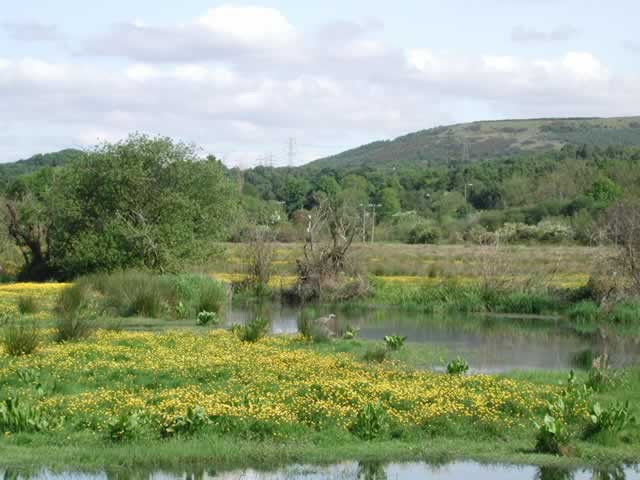
As World Wetlands Day is marked across the globe, attention is turning to the vital role wetlands play in protecting wildlife, tackling climate change and supporting local communities. In the Cynon Valley, few places demonstrate this importance more clearly than Tirfounder Fields and Cwmbach Community Wetlands.
Covering 27 acres on the edge of Aberdare, Tirfounder Fields and Cwmbach Wetlands form a rich mosaic of wetlands, floodplain grassland, woodland and open water. Designated as Sites of Importance for Nature Conservation (SINC), they are recognised as some of the finest remaining examples of unimproved floodplain habitat in Rhondda Cynon Taf.

World Wetlands Day highlights how wetlands act as the planet’s natural life-support systems. At Cwmbach, this is not an abstract concept. The wetlands function as a natural floodplain, holding stormwater during heavy rainfall and releasing it slowly back into the River Cynon. This helps reduce flood risk for surrounding homes while improving water quality downstream.
At the same time, the site supports exceptional biodiversity. Surveys have recorded 27 Birds of Conservation Concern, including red-listed species whose populations are in severe decline. Kingfishers, herons, mute swans and woodpeckers breed here, while winter visitors such as jack snipe rely on the wet ground and shallow pools for feeding.
The wetlands are also home to a confirmed breeding population of otters, protected under UK and European law, along with water voles, grass snakes, bats and a rich assemblage of invertebrates. Dragonflies and damselflies skim the open water, while rare solitary bees depend on the flower-rich meadows and brownfield habitats created by the area’s industrial past.
Plant life is equally remarkable. Damp meadows glow with ragged robin and marsh marigold, while wetter areas support sensitive species such as bogbean, a plant increasingly lost to drainage elsewhere. Several species of wild orchid, all protected under the Wildlife and Countryside Act, flourish in the grassland, alongside bluebells, cowslips and sedges that indicate long-established, unimproved habitat.

This ecological richness has been secured thanks to a major step forward in 2024, when the wetlands were purchased by Cynon Taf Community Housing Group, through their climate action subsidiary Down to Zero. The site is now managed in partnership with Cwmbach Wetlands Group, a local charity founded in 2020 to protect wildlife while ensuring the community can enjoy and learn from the space.
World Wetlands Day also serves as a reminder of what is at stake. Wetlands are among the most threatened habitats globally, and Cwmbach faces pressures from surrounding development, invasive species and changes to water levels. Damage or contamination would not only devastate wildlife but also undermine the wetland’s ability to store carbon, manage floods and provide a place of refuge for people.
During the pandemic, the wetlands became a lifeline for local residents seeking fresh air, calm and connection with nature. That community value remains just as important today. As the RSPB notes in its World Wetlands Day message, protecting wetlands is about safeguarding nature and people, now and for future generations.
On World Wetlands Day, Cwmbach Community Wetlands stand as a powerful local example of why these habitats matter. They are not wasteland or leftover land, but living systems — protecting homes, storing carbon, supporting rare species and enriching everyday lives in the Cynon Valley.

World Wetlands Day also serves as a reminder of what is at stake. Wetlands are among the most threatened habitats globally, and Cwmbach faces pressures from surrounding development, invasive species and changes to water levels. Damage or contamination would not only devastate wildlife but also undermine the wetland’s ability to store carbon, manage floods and provide a place of refuge for people.
Yet despite their recognised ecological value and protected SINC status, Cwmbach Wetlands continue to face a familiar contradiction. While grant funding has been awarded in the name of “improving” the site, the fundamentals of wetland ecology — water sensitivity, soil protection and respect for protected species — have too often been overlooked. World Wetlands Day is a useful reminder that wetlands are not improved by treating them like vacant land waiting to be fixed.
During the pandemic, the wetlands became a lifeline for local residents seeking fresh air, calm and connection with nature. That community value remains just as important today. As the RSPB highlights in its World Wetlands Day message, protecting wetlands is about safeguarding nature and people — not just on paper, but on the ground.
On World Wetlands Day, Cwmbach Community Wetlands stand as a powerful local example of why these habitats matter. They are not wasteland, not development opportunity sites, and not blank canvases for poorly informed “improvements”, but living systems — protecting homes, storing carbon, supporting rare species and enriching everyday lives in the Cynon Valley.
https://www.facebook.com/groups/1423774654490133
Related Posts

Cwmbach Community Wetlands Down to Zero scooped a national Community Management Award Cymru

Cwmbach Community Wetlands Photographic Competition

Cwmbach Community Wetlands Otters
