
Councillor Ann Crimmings, Leader of Rhondda Cynon Taf Council, said: “There is NEVER an excuse to blight our mountains, towns, streets and villages with waste, and we will find those responsible and hold them to account.”
New photographs sent to AberdareOnline appear to show further waste scattered across Aberdare Cemetery, raising fresh questions about how the council has managed land within one of the Cynon Valley’s largest burial grounds.
Aberdare Cemetery should be a place of peace, dignity and remembrance — a quiet environment where families can visit the graves of loved ones without being confronted by discarded building materials, broken memorials or what appears to be industrial waste.
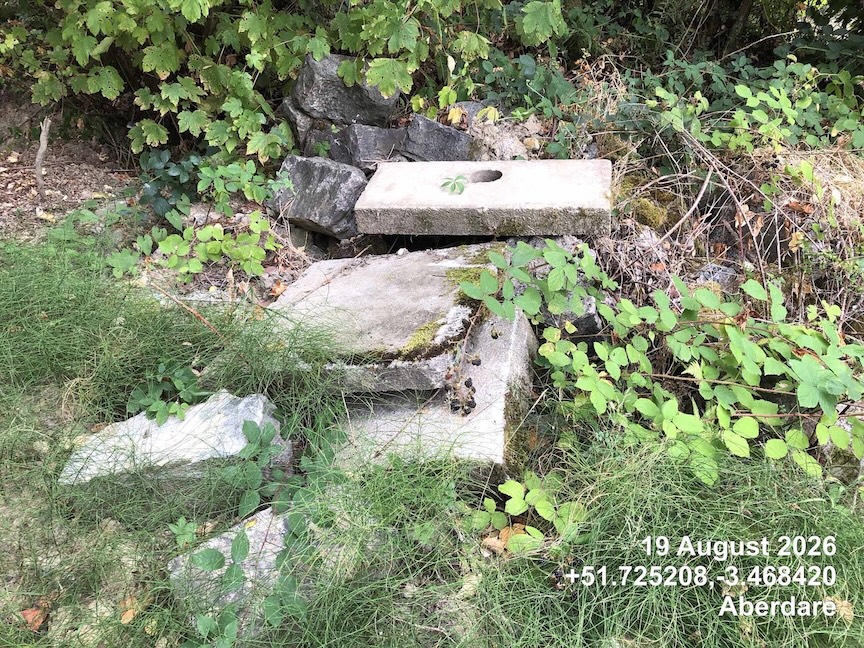
But a series of 21 photographs recently sent to AberdareOnline appears to paint a very different picture.
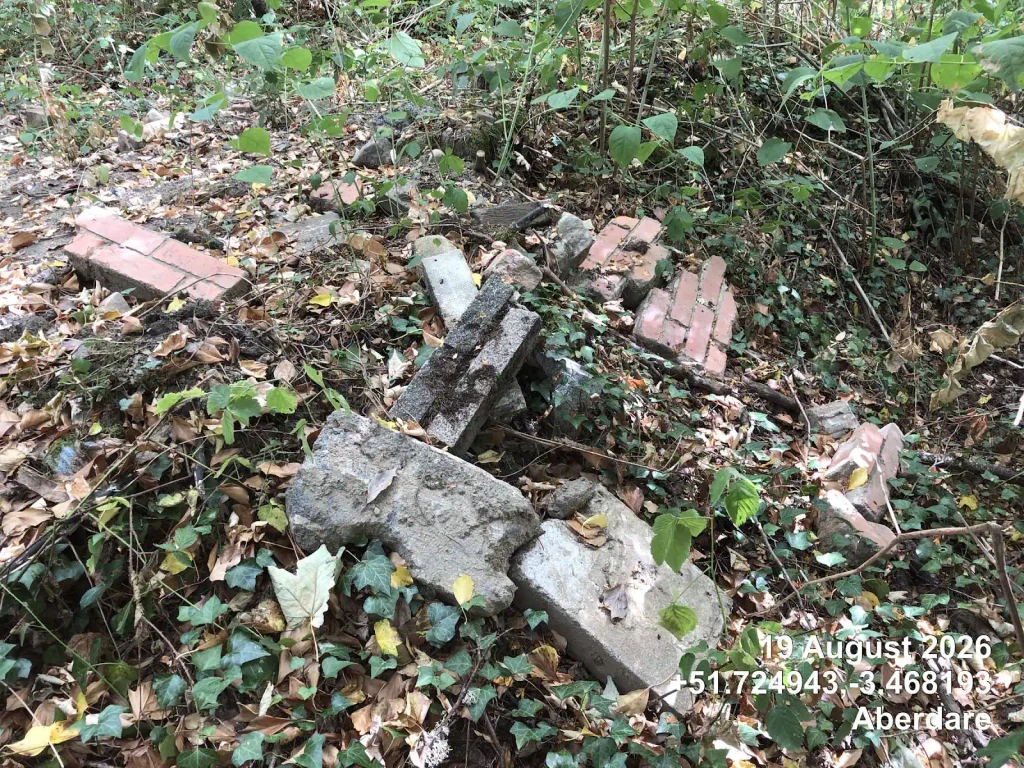
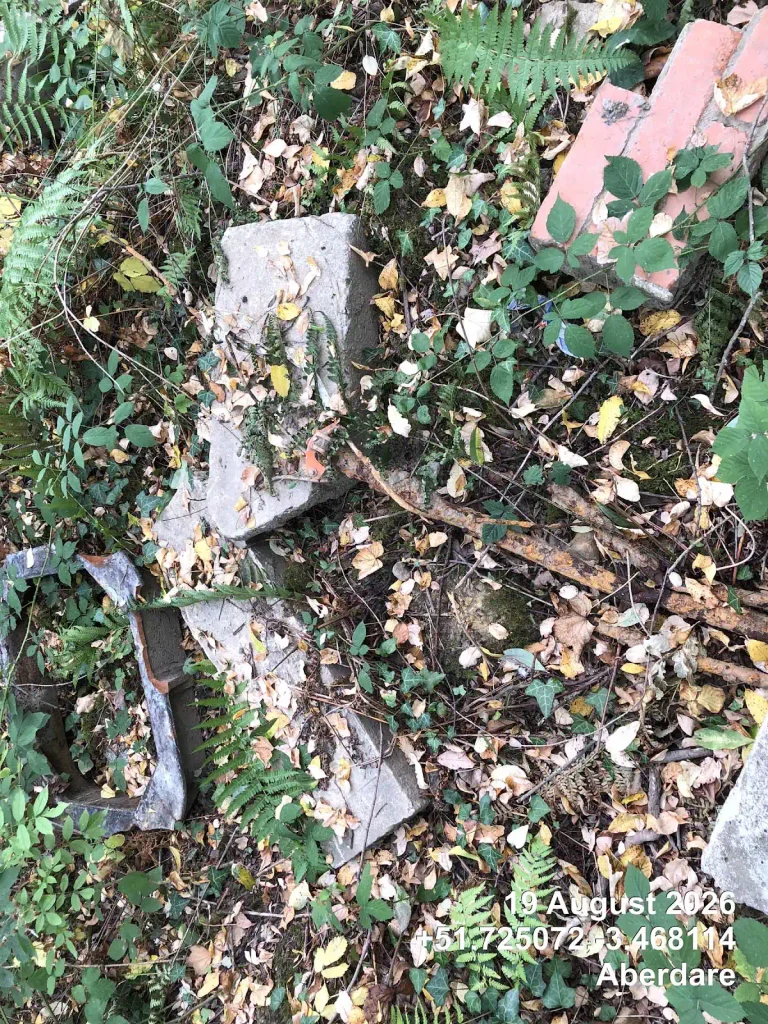
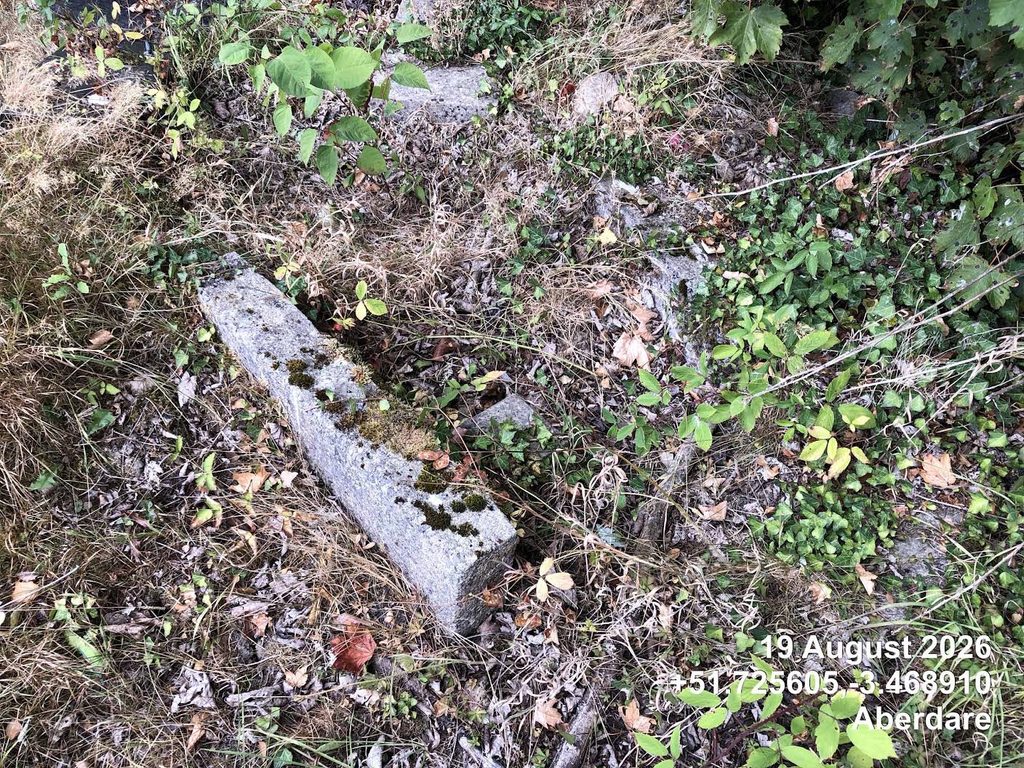
The photographs show material scattered around parts of the cemetery, including what appears to be tarmac or road-building material, builders’ rubble, reinforcing steel and numerous discarded gravestones and grave kerbs.
Some of the older memorial stones appear to have been left for such a long period that vegetation has grown around them.
The new evidence raises an obvious question: how long has this material been accumulating, and who is responsible for allowing it to remain there?
A problem AberdareOnline has reported before
This is not the first time concerns have been raised about waste at Aberdare Cemetery.
AberdareOnline previously reported concerns about an area within the cemetery where broken gravestones, construction debris and other material had allegedly been deposited close to burial plots. At the time, questions were raised about the council’s responsibility for maintaining the cemetery and about the apparent use of part of the site for waste disposal.
There was also a separate issue concerning old memorials.
According to the council’s Bereavement Services Rules and Regulations, when a memorial is renewed, the original memorial or part memorial is required to be removed from the cemetery, with removal being the responsibility of the memorial mason or grave owner.
That raises an important question about how old memorials came to be left within the cemetery in the first place.
New photographs suggest the problem may be wider
The latest photographs appear to show that the issue is not confined to old gravestones.
Among the material visible are what appear to be pieces of tarmac, builders’ rubble and steel reinforcing bar, alongside discarded memorial stones and grave kerbs.
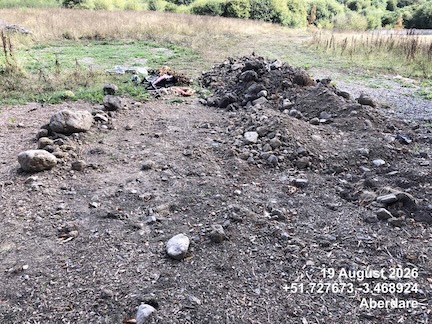
The material appears in several locations, including an area close to land identified in planning documents in connection with the Marsh Fritillary Mitigation and Compensation Strategy associated with the A465 Heads of the Valleys road scheme.
That detail is significant.
RCT Council planning documentation identifies parts of Aberdare Cemetery as one of the larger compensation areas associated with habitat restoration. The council document describes approximately six hectares of habitat restoration and identifies parts of Aberdare Cemetery as having potential for restoration and enhancement because of their grassland characteristics.
The A465 environmental work also involved specific consideration of marsh fritillary habitat and mitigation, with NRW and the relevant local authorities involved in discussions over habitat compensation.
The presence of apparent waste close to such land therefore raises questions about whether the material has been properly assessed and whether its storage or deposition could affect the intended environmental use of the area.
That is a matter that should be answered by the council and Natural Resources Wales.

Who authorised the earlier dumping?
The earlier controversy went further than simply finding discarded memorials in the cemetery.
AberdareOnline was previously informed that a cemetery manager had given permission for a monumental mason to deposit waste at the cemetery.
If that account is correct, it raises questions about whether the person giving permission had the authority to do so and whether the arrangement complied with the council’s own cemetery regulations and environmental waste requirements.
Rather than requiring the material to be removed, the council subsequently buried the waste beneath substantial quantities of soil, according to information previously reported by AberdareOnline.
That raises another question for taxpayers:
Why was public money used to deal with waste that had allegedly been deposited by a private contractor?
And perhaps more importantly:
Was burying the material actually an appropriate method of dealing with it?
Those questions become even more important if further waste has subsequently been deposited elsewhere within the cemetery.
NRW previously involved
Natural Resources Wales has previously been contacted about concerns surrounding waste issues connected with Aberdare Cemetery.
In April 2026, AberdareOnline reported that NRW had confirmed that activity at Aberdare Cemetery remained under investigation. NRW said at the time that it could not comment further while the investigation was active, although it also stated that it was content there was no likely impact on the adjacent Site of Special Scientific Interest.
That investigation and the newly photographed material raise an obvious question:
Does the latest evidence form part of the existing investigation, or has NRW been made aware of these new photographs and the additional locations and materials shown?
The answer matters.
If the material shown in the photographs is waste requiring regulation, the question of who deposited it, who authorised it, where it came from and why it remains at the cemetery should be capable of being established.
What do the council’s own rules say?
There is also a straightforward issue of cemetery management.
A cemetery is not simply an unused piece of council land.
It is a place where people have paid for burial plots and where families have an entirely reasonable expectation that the surrounding environment will be maintained appropriately.
The council’s own Bereavement Services rules place responsibilities on memorial masons regarding the removal of old memorials.
If waste memorial material is being left behind rather than removed, the council should explain how this is being monitored and enforced.
The council should also explain what procedures are followed when material such as rubble, tarmac or other construction waste is found within the cemetery.
Families deserve answers
For families with loved ones buried at Aberdare Cemetery, the issue is about more than waste management.
They deserve to know that the cemetery is being properly managed and that the grounds surrounding graves are treated with the dignity expected of a burial place.
The photographs supplied to AberdareOnline raise several questions that now need clear answers.
Who is responsible for inspecting the cemetery and identifying dumped material?
How long has the material shown in the photographs been present?
Who authorised or deposited it?
Where did the apparent tarmac and construction material come from?
Was any of the material brought onto council land from outside the cemetery?
Was the material classified as waste?
Were the appropriate waste documentation, permissions or exemptions in place?
Has Natural Resources Wales inspected all of the areas shown in the latest photographs?
Has the council paid for any removal, burial, covering or movement of the material?
And perhaps the most important question:
Why has waste apparently been allowed to accumulate within Aberdare Cemetery over a period of years?
A cemetery is not a dumping ground
Nobody is suggesting that every piece of stone or material found within a cemetery automatically constitutes an environmental offence.
There may be legitimate explanations for some of the material shown.
But that is precisely why the council should provide the answers.
The photographs appear to show more than an isolated piece of litter. They show multiple types of material, in multiple locations, including material that appears to have been present for some considerable time.
If the council has authorised the storage or deposition of these materials, it should explain the legal and operational basis for doing so.
If it has not authorised them, it should explain what action it has taken to identify the source, remove the material and prevent further dumping.
And if some of the land forms part of an area intended for environmental mitigation and habitat restoration, the council and NRW should explain whether the deposited material has any implications for those objectives.
Aberdare Cemetery is a place where people go to remember those they have lost.
It should not leave families asking whether parts of the cemetery have quietly become a dumping ground.
AberdareOnline has asked Rhondda Cynon Taf County Borough Council and Natural Resources Wales to respond to the latest evidence and will publish any substantive response received. To date, RCT Council has not responded. NRW has advised it has received the news report but has not commented
Rhondda Cynon Taf Council: We all have a duty of care to control our waste and ensure it is disposed of legally. Please remember that if you give your waste to someone who later illegally fly-tips it, you could face a minimum £300 fine.
If you witness fly-tipping or have information regarding illegal dumping, please report it immediately at www.rctcbc.gov.uk/reportit.
Related Posts

Concerns Raised Over Alleged Waste Dumping Inside Aberdare Cemetery
“Dumped and Forgotten”: Questions for NRW After Waste Incidents at Ynys and Aberdare Cemetery

Council Claims Leadership on Fly-Tipping – But Past Waste Controversies Raise Questions