

Rhondda Cynon Taf Council has declared itself one of Wales’ leading authorities in tackling fly-tipping, but critics say the authority must also answer questions about its own handling of waste in several controversial cases.
New Welsh Government figures covering April 2024 to March 2025 show 18 fly-tipping prosecutions in Rhondda Cynon Taf, out of a total of 69 across Wales. The council says the figure reflects the work of its enforcement officers and their determination to pursue offenders through the courts.
Council data shows its Streetcare Enforcement team investigated more than 4,020 incidents of fly-tipping, issuing fixed penalty notices and recovering almost £30,000 in fines and court costs.
The clean-up bill for illegal dumping in the county borough reached over £150,000, with the most common items dumped being household waste (around 2,300 items) and white goods (204 items).
Councillor Ann Crimmings, cabinet member for environmental services, praised the enforcement team and warned offenders that the council would continue to take action.
“This behaviour will not be tolerated in RCT. There is never an excuse to blight our towns, streets and villages with waste, and we will find those responsible and hold them to account,” she said.
However, the council’s strong rhetoric has prompted criticism from some residents who say the authority’s own waste management record deserves closer scrutiny.
The Glynhafod waste dumping controversy
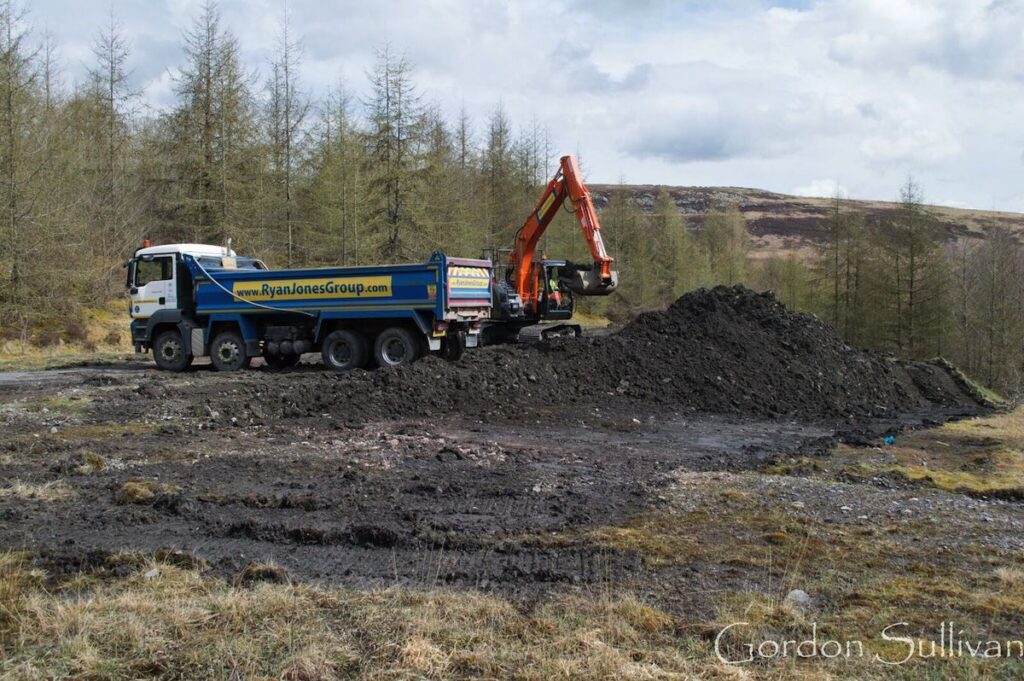
Questions date back to 2016 when large quantities of construction waste were deposited near the Glynhafod reservoirs above Cwmaman, a site widely known locally as “The Reservoirs”.
Waste from the construction of a new £50 million school in Aberdare was transported to the mountain location.
The site operated under a U1 exemption, which allowed the reuse of up to 1,000 tonnes of waste material. However, reports indicated that 2,460 tonnes had been deposited, significantly exceeding the permitted limit.
Following intervention and guidance from Natural Resources Wales, the council was required to remove 1,460 tonnes of the material in order to comply with the exemption.
The operation reportedly required around 150 lorry loads using twenty-tonne vehicles to remove the excess waste, sending heavy vehicles through the narrow streets of Cwmaman.
Critics questioned the financial impact of the decision, pointing out that the waste had first been transported to the site and dumped before needing to be removed and transported again for disposal elsewhere.
For residents already facing council tax increases and cuts to public services, the episode raised questions about the cost to local ratepayers.
Ynys Sports Centre and Cwmbach Wetlands concerns
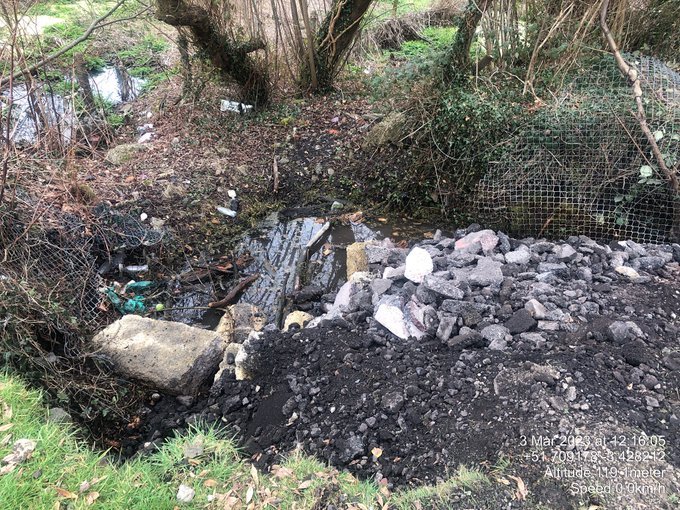
More recently, concerns have been raised about work carried out at Ynys Sports Centre, where the council filled a ground collapse that had created a void.
In a response to a complaint, council officer Andy Wilkins said the authority used “uncontaminated highway arisings” as general fill and did not classify the material as waste because it had been selected for its suitability.
He also said Natural Resources Wales investigated complaints but did not take enforcement action, concluding there was no significant environmental risk.
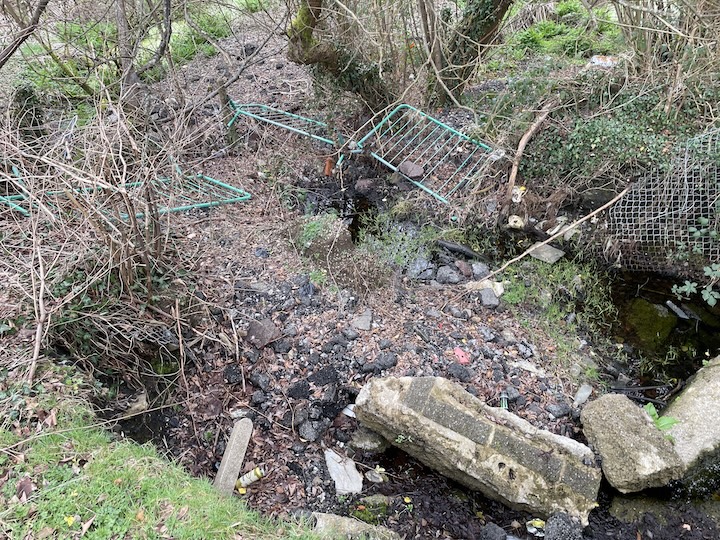
However, residents have disputed this assessment, saying tarmacadam and road materials were washed down into the nearby Cwmbach Community Wetlands during heavy rainfall.
Environmental campaigners argue that depositing construction materials on a floodplain close to a wetland raises serious concerns, as such locations are vulnerable to runoff and pollution entering surrounding waterways.
Under environmental legislation, the deposit of waste on land without proper authorisation — particularly in sensitive areas such as floodplains and wetlands — can constitute fly-tipping or illegal waste disposal.
Residents also point out that safety barriers which council officials said would be removed last August remain in place months later, raising further questions about the situation at the site.
“No one above the law”
Across Wales, local authorities collectively spend almost £2 million every year clearing fly-tipped waste, according to Welsh Government estimates.
While Rhondda Cynon Taf Council says its enforcement work shows it is leading the fight against illegal dumping, critics say the authority must ensure the same standards apply to its own actions as those expected of residents and businesses.
As one resident put it: if councils insist there is “no excuse for fly-tipping,” then the public may reasonably expect that principle to apply to everyone — including the council itself.
Related Posts
Council Faces Questions Over Two Fly-Tipping Incidents

Section 33(1) of the Environmental Protection Act 1990 sets out the offence of fly tipping describing it as the “illegal deposit of any waste onto land that does not have a licence to accept it”.
“Questions marks over Carwyn Jones’ leadership during steel crisis” – Eluned Parrott
