
Natural Resources Wales launched a major public campaign this week warning that Wales faces a growing water crisis. Climate change, it says, is making our summers drier and our winters wetter but less useful for replenishing supplies. People need to change their behaviour. Everyone must use less.
What the campaign does not dwell on is this: while the public has been consuming water at 140 litres a day, Welsh Water has been losing 240 million litres a day through leaking pipes — and lying to its regulator about it for years.
Nor does it mention that Welsh Water has quietly closed, drained or demolished over a dozen reservoirs across Wales in the past two decades — at the very time scientists are warning that every drop of stored water will matter more in future.
This is the story of how Welsh Water has managed — and mismanaged — one of Wales’s most precious natural resources since privatisation in 1989.
Privatisation: How It Began
Welsh Water was privatised as part of the Thatcher government’s sale of the ten regional water authorities in England and Wales in 1989. It was floated on the stock market as a shareholder-owned company, like the others.
Within a decade, the model was in trouble. Welsh Water’s parent company, Hyder, had taken on significant debt and diversified into electricity through the acquisition of South Wales Electricity. By 2000, Hyder was struggling financially and put Welsh Water up for sale.
It was bought by Western Power Distribution, which then sold it on in January 2001 to Glas Cymru — a newly created company limited by guarantee, with no shareholders. That structure has remained in place ever since. Welsh Water is the only major water company in England and Wales owned this way.
The fundamental problem — a privatised utility carrying enormous debt, funded by capital markets — was not resolved by the change of ownership. It was inherited.
Reservoirs Quietly Removed from the Supply Network
One of the most significant and least-discussed aspects of Welsh Water’s management of the national water supply is what has happened to its reservoir estate over the past 20 years.
Welsh Water currently operates around 92 reservoirs. Over the past two decades, it has quietly taken at least 12 to 14 reservoirs out of supply — many of them demolished entirely or drained and left empty. Some were genuinely obsolete. Others were removed from the supply network for reasons of cost or changing demand projections, at a time when no one was seriously worried about water scarcity.
The picture now looks very different. Here is what has happened to some of those reservoirs:
Clydach Reservoir, Llanwonno Forest, Rhondda
This reservoir ceased supplying drinking water in 2004. In 2024 it was drained — without any warning to the public, prompting a petition with hundreds of signatures and widespread outrage across the Rhondda. Welsh Water said it had no plans to refill it and intended to return it to a natural lake. Residents described arriving to find what had been a beloved local landmark reduced to a muddy hollow.
Upper Neuadd Reservoir, Brecon Beacons
Drained and left empty since approximately 2016. Its Grade II* listed Victorian dam has been retained — tellingly, Welsh Water’s own engineers acknowledged in 2016 that although the reservoir was “not currently required for water supply, it is considered likely that the asset will be required in the future as the effects of climate change and increased demand take effect.” It was emptied anyway.
Llyn Bran, Denbighshire
The hospital this reservoir originally supplied closed in 1995. The dam was finally demolished in 2022 at a cost of £1.7 million. The reservoir has been returned to a natural lake. Welsh Government approval was required.
Llyn Anafon, North Wales
Supply ended in 2002; decommissioning completed from 2019 onwards. This was the first case in the United Kingdom of a reservoir being formally discontinued under the Reservoirs Act on Imperative Reasons of Overriding Public Interest — a rare legal process.
Two Cilcain Reservoirs, Flintshire
Two adjoining Victorian-era reservoirs in the Clwydian Range AONB, both decommissioned and their dams demolished between 2023 and 2024. The riverbed was restored to its natural course.
Perthcelyn Reservoir and Aberpennar Street Reservoir, Mountain Ash, Rhondda Cynon Taf
Both removed from supply. Their loss is particularly notable given the communities they once served in RCT.
Beyond these named sites, Natural Resources Wales’s own biennial reservoir safety reports confirm that four further unnamed reservoirs were formally discontinued and removed from its register between 2019 and 2025.
The pattern is consistent: reservoirs built at great expense by Victorian engineers, maintained for a century, quietly removed from service during a period of relatively cheap water and low demand — just as climate scientists are beginning to warn that stored water is going to become increasingly precious.
The Leakage Scandal: 240 Million Litres a Day, Hidden for Years
The single most damaging episode in Welsh Water’s recent history — and one with direct implications for the current campaign asking residents to save water — is the leakage scandal.
For years, Welsh Water told Ofwat, its customers, and the public that it was losing around 157 million litres of water a day through leaking pipes.
The true figure, revealed in 2023 after an internal review, was 240 million litres a day.
The difference — 83 million litres a day — is roughly equivalent to the entire daily water consumption of a city the size of Cardiff, lost every single day, misreported for years.
Ofwat launched an investigation and concluded in March 2024 that Welsh Water had “misled customers and regulators on its performance on leakage and per capita consumption.” The company was ordered to pay £40 million to benefit customers.
To be absolutely clear about the scale of this: the public campaign launched this week asks residents to reduce their daily water use by 28 litres per person. Welsh Water was wasting the equivalent of the entire daily water use of many thousands of households — every day — and telling its regulator it was wasting far less.
The company’s explanation was that an internal restructure and IT scheduling issues caused the data errors. Ofwat’s conclusion was that this represented a fundamental failure of corporate governance and board oversight.
Welsh Water issued customers a £10 rebate.
The Sewage Crisis: Rivers Poisoned, Wildlife Destroyed
Leakage is not the only environmental failure. Welsh Water has presided over a dramatic and sustained deterioration in the quality of Wales’s rivers and waterways.
In 2022, Welsh Water discharged raw or partially treated sewage into rivers, lakes and coastal waters for over 916,000 hours — approximately 20% of all sewage discharge hours recorded across the whole of England and Wales that year. For a company serving around 3 million people, that proportion is extraordinary.
Sewage pollution incidents have risen every year for five consecutive years. In 2024 Welsh Water recorded 155 pollution incidents — the highest in a decade, a 42% rise over ten years. Of those, 132 were sewerage incidents, up from just 70 in 2015.
The core regulatory problem is that, since 2010, water companies have been required to monitor and report their own discharges to Natural Resources Wales. NRW does not independently check most of the data it receives — it relies on the company to tell the truth.
Welsh Water did not always tell the truth.
In May 2025, Welsh Water was fined £1.35 million after pleading guilty to over 800 breaches of its environmental discharge permits. The offences related to its own self-monitoring reports for 2020 and 2021, spread across 300 sitesacross Wales and Herefordshire. NRW officers said they were “alarmed” when they reviewed the data — the quality of information had “noticeably deteriorated compared to previous years.”
In 2022, Welsh Water was self-reporting only 46% of sewage spills to NRW — against a required standard of 90%. By 2024 this had improved to 74%, still below the 80% target. NRW acknowledged to MPs that it was not doing more independent monitoring primarily because of a lack of funding.
The river campaign group Afonydd Cymru said publicly in January 2025 that they had raised the self-monitoring failures with NRW back in 2023 — and that NRW had been slow to act.
Killing Wildlife: The Toad Reservoir Disaster
The environmental cost of how Welsh Water manages its reservoir estate is not only about water supply. In April 2026, Hafren Dyfrdwy — the Welsh Water subsidiary covering north-east Wales — drained the Nant-y-Ffrith reservoir in Denbighshire over the Easter weekend.
It did so during the peak of the amphibian breeding season, and without giving any advance notice to local wildlife groups.
Volunteers from Wrexham Toad Patrols had spent the weeks before Easter helping more than 1,500 common toads safely cross the busy A525 road to reach the reservoir for breeding — a project they had run for years. When they arrived after Easter, the reservoir was empty.
More than 1,000 toads are feared to have died. The group described themselves as “shocked, angry and heartbroken.”
Hafren Dyfrdwy said the works were essential for safety reasons. It offered no explanation for the failure to give advance warning to the conservation volunteers who had just spent weeks helping the same animals reach the reservoir that was then drained around them.
Fines, Prosecutions and Penalties: The Record Since Privatisation
Welsh Water’s regulatory record since privatisation is a catalogue of failures, many of which have resulted in fines and enforcement action. The most significant in recent years:
| Year | Action | Amount / Outcome |
|---|
| Year | Action | Amount / Outcome |
|---|---|---|
| 2023 | Admitted leakage misreporting; issued customer rebate | £10 per customer (~£20m total) |
| 2024 | Ofwat enforcement: misleading regulators on leakage | £40 million fine |
| 2024 | Ofwat underperformance penalty (leakage, pollution, supply) | £24.1 million |
| 2024 | Criminal prosecution: environmental permit breach at sewage facility | £90,000 fine |
| 2024 | Ofwat blocked customer money funding executive bonuses | £163,000 recovered |
| 2025 | NRW prosecution: 800+ self-monitoring breaches across 300 sites | £1.35 million fine |
| 2026 | Ofwat enforcement: sewage network failures, inadequate management | £44.7 million (accepted June 2026) |
That represents over £110 million in regulatory penalties and enforcement packages in three years alone — all of it ultimately funded through customer bills or diverted from the investment programme.
In 2024, NRW downgraded Welsh Water from four stars to two stars — “improvements required” — in its annual Environmental Performance Assessment. The former Welsh Government Economy Minister Andrew Davies described Welsh Water as “consistently the worst performing of the ten water companies in England and Wales.”
Now the Public Is Being Asked to Save Water
Against all of this sits the NRW campaign launched this week: Dewch i Arbed Dŵr / Let’s Save Water. Backed by £75 million of industry funding over four years, it asks every person in Wales to reduce their daily water use by 28 litres.
The campaign’s warnings about climate change are genuine. Wales does face a more uncertain water future. Wetter winters and drier summers are already being recorded. Scientists are right that behaviour change will be needed.
But the campaign, funded by the same water industry it praises, asks individuals to change their habits while placing only passing acknowledgement on the industry’s own failures.
The company that lost 240 million litres a day through leaking pipes — and concealed it from regulators for years — is asking you to take a shorter shower.
The company that has closed or demolished at least a dozen reservoirs across Wales over the past 20 years — at the very time scientists are warning that stored water matters — is asking you to fix your dripping tap.
The company that discharged sewage into Welsh rivers for 916,000 hours in a single year — poisoning ecosystems, killing fish, fouling bathing waters — is asking you to be a better steward of the natural environment.
The public deserves better than that. And it deserves regulators — both Ofwat and NRW — who are willing to hold a £924 million-a-year company to the standards its customers are being asked to meet.
Sources: Natural Resources Wales; Ofwat enforcement decisions 2024-2026; BBC News Wales; The Guardian; Nation.Cymru; WaterProjectsOnline; NRW Reservoir Safety Reports 2019-21 and 2023-25; Afonydd Cymru; Clwydian Range AONB; Countryfile; University of Greenwich (David Hall, 2025); AberdareOnline archive.
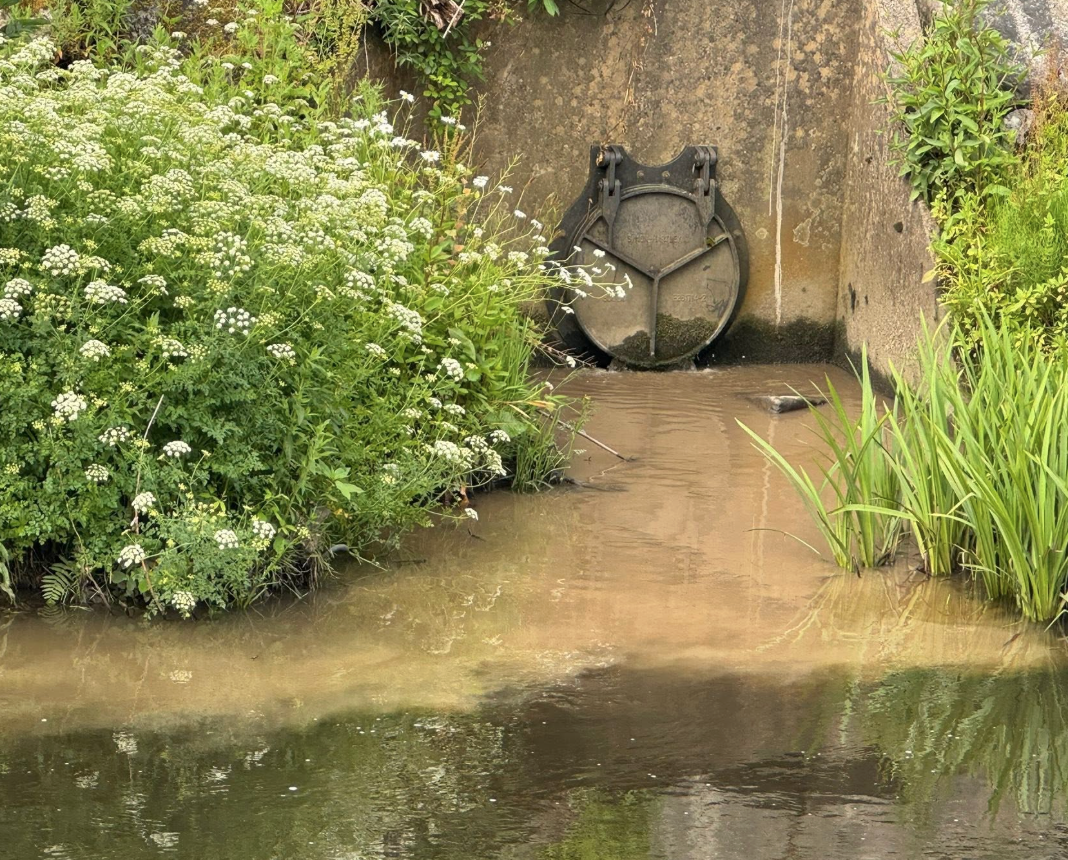
Image by Dai Williams Mountain Ash
Related Posts

Surge in lockdown running inspires new campaign Run Wales sees 18% of adult population running during lockdown

Bathing water samplers set for a busy season of water quality checks
Welsh Labour want devolution of justice and policing. Just think what is Welsh Labour’s record is up to now of running other large organizations in Wales good or bad