
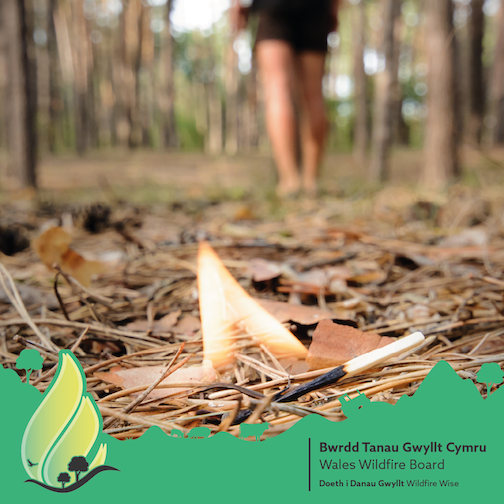
People planning to enjoy Wales’ great outdoors this Bank Holiday weekend are being urged to act responsibly and think carefully about the impact their actions can have on the environment, wildlife and local communities.
The period of warm and dry weather experienced across Wales has seen the risk of wildfires increase.
Natural Resources Wales (NRW) officers have been working closely with Fire and Rescue Services and other partners to support efforts to manage and tackle grass and wildfires across the country.
On Wednesday (29 April 2026), NRW deployed a fire-fighting helicopter to carry out targeted water drops on the Elan Valley wildfire, Cwmystwyth, due to the high risk to nature, difficult ground access, forecast winds and lack of significant rainfall.
Since last night, teams have assisted South Wales Fire and Rescue Service at a large wildfire at Waun Wen near Merthyr Tydfil.
With conditions forecast to remain dry over the coming days, Wales is now entering an elevated-risk period for wildfires. While teams will continue to work around the clock to protect people, nature and property, NRW is also reminding people of the devastating consequences lighting fires and using disposable BBQs can have on the environment.
Richard Preece, Duty Tactical Manager for Natural Resources Wales, said:
“Wales’ landscapes are incredibly special, but they are also vulnerable. It only takes one careless act for a fire to start and quickly get out of control. We’re asking everyone visiting the outdoors this Bank Holiday to think about the consequences of their actions and help us protect our wildlife, our water and our communities.”
As people enjoy the outdoors over the coming Bank Holiday, people are urged to be #WildfireWise by following simple but critical advice:
- never light fires in the countryside.
- only use disposable BBQs where signs say you can, never leave them unattended and ensure they are fully put out before you leave.
- take all litter home, especially glass bottles.
- avoid discarding cigarettes or matches.
- report any signs of fire or suspicious activity immediately by calling 999.
Carl Williams, Arson Reduction Manager for MAWWFRS said:
“Wildfires not only divert crews from responding to other emergencies but also expose firefighters to significant risk. These incidents often demand large numbers of personnel, including On‑Call staff who must leave their primary employment to attend incidents and remain deployed for extended periods, placing considerable strain on personnel and resources.
“Unlike building fires, wildfires can burn across vast rural landscapes, threatening nearby homes, farms, livestock, power supplies and key transport routes. Smoke from these fires can also cause road hazards and serious health impacts, particularly for vulnerable people.
“By making responsible choices, the public can help protect firefighters, safeguard communities, and preserve Wales’s countryside for future generations.”
Rhydian Slade-Jones, Landowner Engagement Officer for SWFRS added:
“We work closely with Natural Resources Wales, local farmers and landowners throughout the year to identify high risk areas and put preventative measures in place, but we can’t do it alone. Most wildfires in Wales are caused by human activity, so we’re asking everyone to act responsibly. If you see any deliberate fire setting or anti-social behaviour on our hillsides, it is important you report it straight away, your actions can make a big difference in keeping our communities and crews safe.”
While it can be difficult to understand, most wildfires in Wales are started deliberately and are classed as arson. Others are caused by carelessness, often through the inappropriate use of BBQs or open flames in the countryside. Very few wildfires are the result of accidents or natural causes.
Wildfires leave a trail of destruction that can last for years. Trees, plants and wildlife are unable to escape the flames, with whole habitats destroyed in a matter of hours. Fires also have wider environmental impacts, as ash and disturbed soils are washed into rivers, lakes and reservoirs, reducing water quality and harming fish and other aquatic life.
The loss of vegetation increases the risk of soil erosion and flooding, while damaged landscapes can take decades to recover. These fires leave lasting scars on Wales’ much-loved countryside, affecting those who live, work and visit there.
As well as long-term damage to nature and forestry, wildfires put lives at risk. Firefighters, land managers and nearby communities can all be threatened by fast‑spreading fires and smoke, making prevention the safest and most effective protection.
People can learn more about wildfire prevention and safety advice by following the hashtag #WildfireWise #DoethiDanauGwyllt – a campaign from the multi-agency Wales Wildfire Board. Preventing wildfires starts with individual responsibility.
Related Posts

Working Together To Protect Our Countryside And County Borough

10 ways to be great outdoors this August bank holiday
Support for a St David’s Day Bank Holiday for Wales
