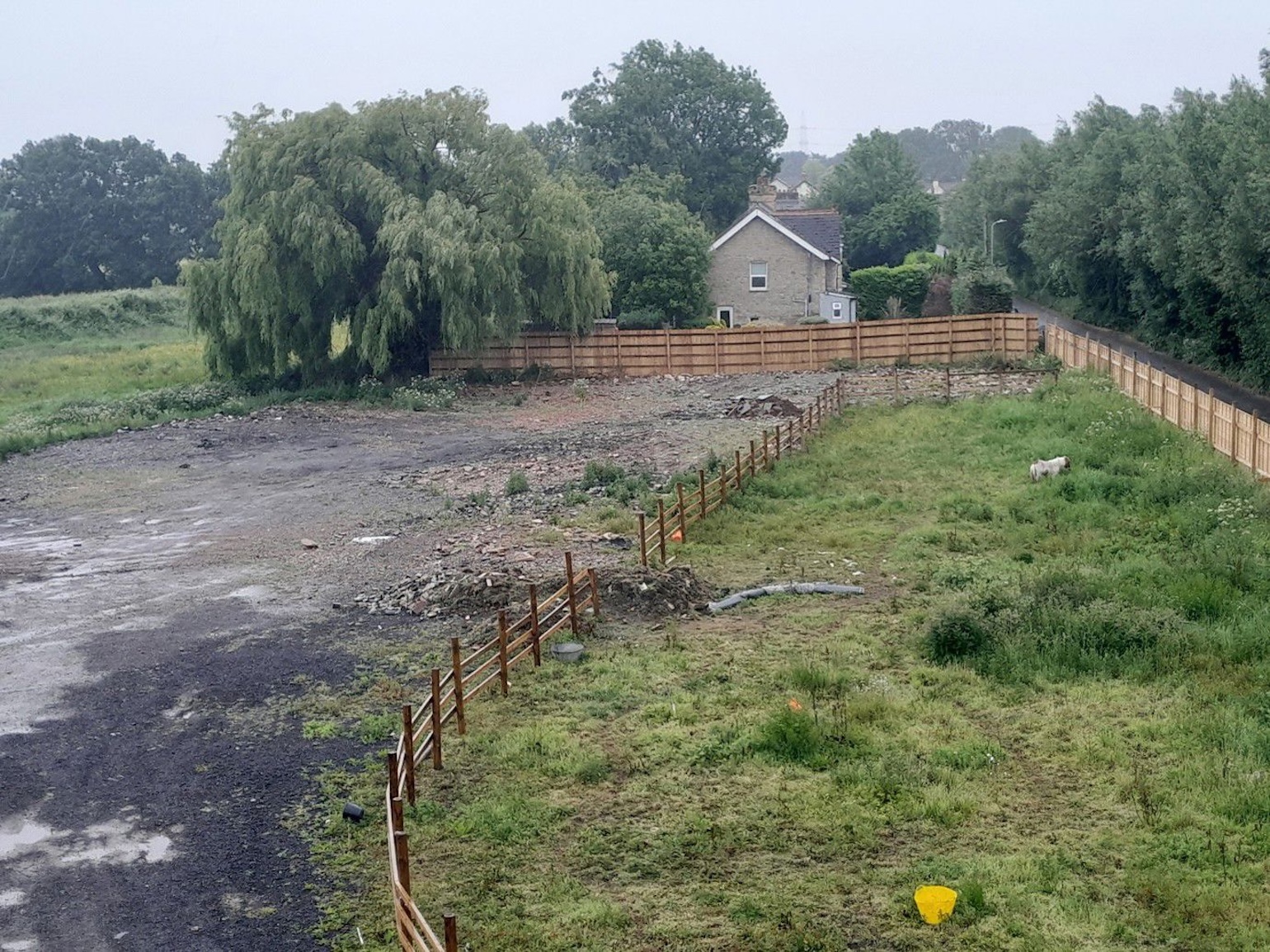
Natural Resources Wales (NRW) and Monmouthshire County Council have secured a High Court injunction to prevent further unauthorised activity and environmental damage on Whitewall Common, Magor, part of the highly sensitive Magor and Undy Site of Special Scientific Interest (SSSI).
The full injunction, granted on 26 February 2026 at the Cardiff District Registry of the High Court, prohibits named individuals:
Ronald Connors, Jeremiah Connors, Luke Williams, Anthony Strange, Morgan Harvey, Andrew Barton and Tobermore Paving & Development Ltd
and “persons unknown” from carrying out a range of activities on the land, including:
Damaging or altering reens or watercourses, including Whitewater Winter Sewer Reen and Mill Reen,
Interfering with flood-risk management infrastructure,
Moving or removing concrete blocks placed to secure the site.
Following the order being granted, NRW and Monmouthshire County Council acted swiftly to secure the entrance to the site by installing large concrete blocks to prevent further unauthorised access.
Magor and Undy SSSI is a vital part of the Gwent Levels, one of Wales’ most historically significant and ecologically rich landscapes.
The site is protected for its network of ancient reens — traditional man-made drainage ditches found across the Gwent Levels — which host a wide range of rare aquatic plants and insects, and is as important site for the shrill carder bee.
Because the injunction also applies to “persons unknown”, any individual entering the site to carry out restricted activities may be held in contempt of court, risking fines, seizure of assets, or imprisonment.
Ioan Williams, NRW’s Operations Manager (Land and Assets) for South East Wales, said:
“The Magor and Undy SSSI is internationally recognised for its rare wildlife and ancient reen systems, and we will not allow its destruction to continue.
“Securing this order reflects months of hard work by our teams and our partners at Monmouthshire County Council. It’s a vital step in protecting one of Wales’ most sensitive and historically important landscapes.
“Anyone considering breaching this injunction — whether named in the order or not — should be in no doubt about the consequences and this injunction should be a clear deterrent.
“If you enter this site to dump waste, carry out works, damage reens or interfere with the concrete blocks, you will face legal action. We will continue to use every legal tool available to protect this SSSI and hold those responsible to account.”
Cllr Paul Griffiths, Monmouthshire County Council’s Deputy Leader and Cabinet Member for Planning and Economic Development, said:
“Whitewall Common is a nationally important landscape that must be protected for both its wildlife and its role in managing flood risk.
“Located within the Gwent Levels SSSI (Site of Special Scientific Interest), this area is one of the largest of its kind in Wales. It is crucial for various species and habitats at both national and international levels.
“This injunction sends a clear message that unlawful activity causing environmental harm will not be tolerated in Monmouthshire.
“We have worked closely with Natural Resources Wales to secure this order and to take immediate action on the ground to prevent further damage. The council will continue to use all available legal powers, alongside our partners, to safeguard this sensitive site and protect it for future generations.”
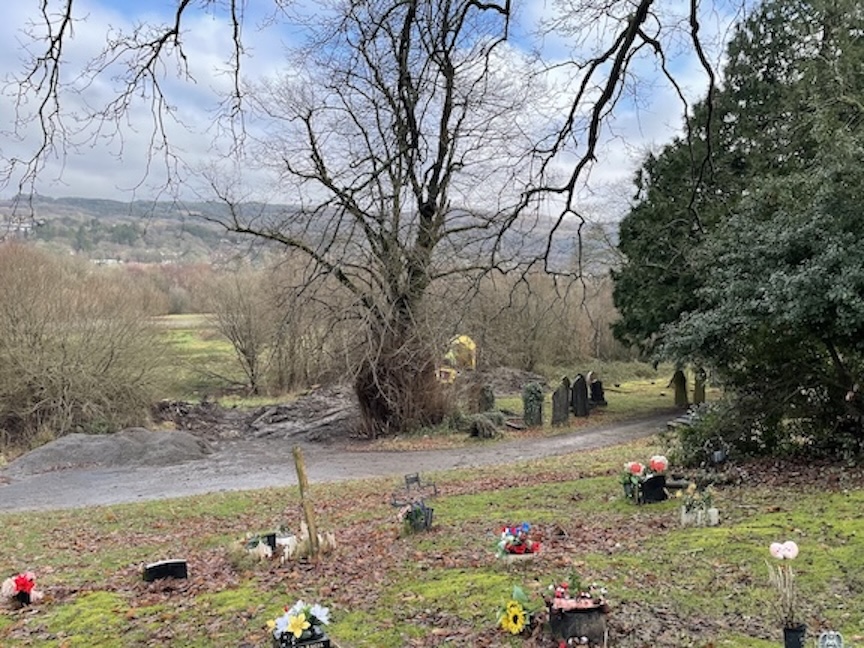
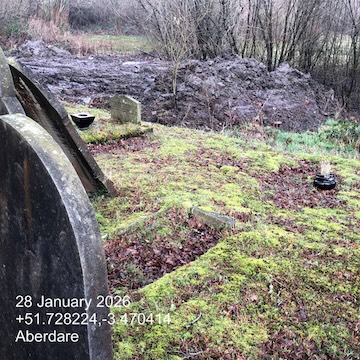
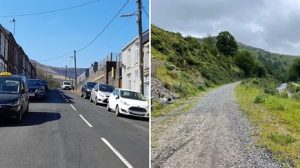
Aberdare Cemetery is also an SSSI site
But you would not think that it is the way it is abused by the council
Section 5 of the SSSI and Marsh Fritillary Mitigation and Compensation Strategy identifies in Paragraph 5.3, a series of compensation measures to off-set the loss of grassland, marshy grassland and fen meadow habitats are identified. These include bringing forward an area of approximately 6 hectares of habitat restoration within close proximity of the SSSI (and adjacent SINC), which through long-term habitat restoration and aftercare will have a good potential to develop flora and fauna communities that will provide effective compensation for SSSI impacts. The larger of the compensation areas is Aberdare Cemetery (Areas 9 and 12) which is identified in the Report as currently supporting a mosaic of semi and unimproved marshy grassland with some Devil’s-bit Scabious, but which has been heavily encroached on by scrub and young trees. As historic aerial photos indicate this site was once a more extensive areas of grassland which has over recent decades become increasingly overgrown with rank vegetation which has developed and spread through a lack of management. The ‘root habitats’ of the original grassland are however old pasture, with similar unimproved soils to adjacent SSSI and SINC areas and therefore have a good potential to become more extensive and species rich through the habitat restoration and enhancement management work that 5.3 identifies.
There is a good potential that key SSSI (and SINC) grassland, marshy grassland, and fen meadow communities, such as National Vegetation Classification communities MG5, M23, M24 and M25 can be restored. In addition, Devil’s-bit Scabious planting and the potential SSSI (and other) soil/seedbank re-use provide options for further mitigation and compensation. Longterm (identified as ‘in perpetuity’ in the SSSI and Marsh Fritillary Mitigation and Compensation Strategy) habitat management and ecological monitoring are identified as key components. Aberdare Cemetery compensation site is within 40 metres of the Tir Mawr part of the SSSI, and therefore has good SSSI connectivity, and will form a southern extension of nature conservation managed land to the designated SSSI area.