
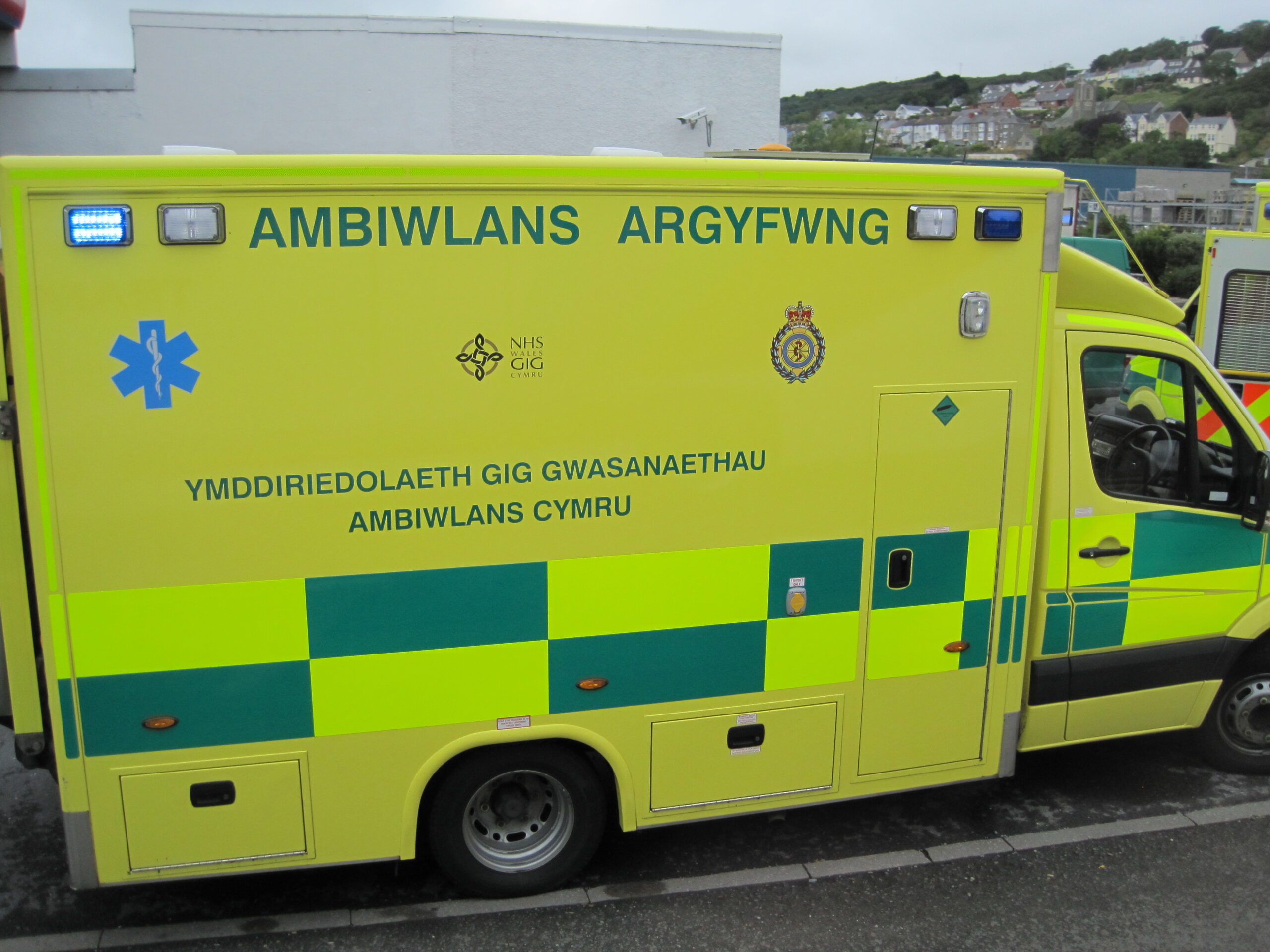
The Welsh Ambulance Service led 999 RESPOND-2 study, which is funded by the National Institute for Health and Care Research, aims to improve decision-making around whether to send Enhanced and Critical Care Teams to emergency calls.
These specialist teams can deliver advanced care for seriously ill and injured patients at the scene of an incident.
Advances in technology have enabled ambulance services to test live-stream video from callers’ smart phones during an emergency call, to help ambulance staff quickly assess the incident scene and patients to accurately determine how urgently help is needed for an unwell patient and what type of resource is required.
The study is a sponsored by the Welsh Ambulance Services University NHS Trust and brings together Wales Air Ambulance, the Emergency Medical Retrieval and Transfer service, other UK ambulance services, universities, and members of the public.
Little is known about how introducing live video changes the way people communicate during an emergency or how it influences decision making.
The research involves comparing video consultation calls, where clinicians can see the patient, the accident scene and other factors, with traditional 999 audio calls, where the clinician can only make a decision based on descriptions from the caller.
GoodSam instant-on-scene video streaming system (without recording) is already used by the EMRTs Critical Care Hub.
Video recording will form part of the research and therefore, recording will be temporarily enabled for research purposes.
All video footage used in the study will require consent and will not be used if consent has not been obtained.
More information on this is available within the study’s Privacy Notice
Professor Nigel Rees, Assistant Director of Research and Innovation at the Welsh Ambulance Service, said: “We’re studying how emergency critical care teams size up risk and severity in high pressure and time sensitive situations.
“We are doing this by comparing video consultation calls, where clinicians can see the patient, the accident scene and other factors as opposed to traditional 999 calls, where the clinician can only make a decision based on descriptions from the caller.
“We hope to learn more about who sees what, who says what and how these decisions shape emergency response when seconds matter and really can be the difference between life and death.
“From Major trauma to severe medical emergencies, Enhanced Critical Care Teams are integral to prehospital and emergency services, but they are a finite resource.”
Related Posts

‘999? I’ve got a wobbly tooth!’ – Non-emergency calls to Welsh Ambulance Service revealed

Welsh Ambulance Service Launches New Short Message Service

LET THEM EAT CAKE: a video of a day in the life of Macmillan at Eisteddfod 2015