
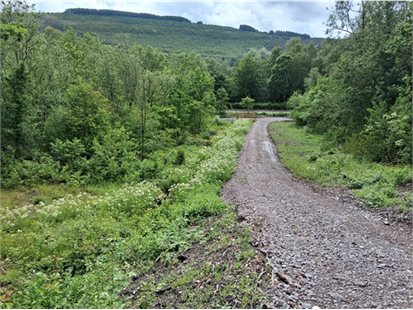
Important maintenance work will take place at the Craig y Duffryn tip in Mountain Ash from next week, as vegetation clearance will reduce the risk of obstructions to the site drainage.
Last year, the tip – located off the A4059 near Mountain Ash Comprehensive School – benefitted from a Welsh Government-funded scheme that created several on-site access tracks.
The Council has now secured further funding from the Coal Tip Safety Grant in 2026/27 for the upcoming works, which will start from Monday, June 15, and last up to two weeks.
Vegetation clearance from drainage channels and maintenance tracks will support regular tip inspections, help drainage systems work effectively, and reduce the risk of blockages. This work will also help to maintain infrastructure and enhance the site’s biodiversity, helping to create and preserve open habitat corridors for wildlife.
Work will be carried out by the RCT Streetcare Team, with staff accessing the tip from Mill Road.
While overall disruption is expected to be minimal, there may be an increase in construction traffic locally during the scheme – however, such activities will avoid the busier school pick-up and drop-off periods each morning and afternoon.
Tip safety and biodiversity signs will be installed to inform the public of the works.
The Council has received £13.7 million from Welsh Government’s Coal Tip Safety Grant in 2026/27, enabling our dedicated Tip Safety Team to monitor and maintain Rhondda Cynon Taf coal tips this year – while developing several larger tip safety projects. This follows £11.49 million allocated by the grant last year.
How Local Authorities should operate in June
To legally and safely clear vegetation for drainage in June, local authorities must take specific steps:
- Pre-Work Ecological Checks: Before a single branch or reed is cut, a qualified ecologist or trained operative must conduct a thorough visual inspection of the site to ensure no active nests are present.
- Establish Buffer Zones: If an active nest is discovered, all clearance work in that immediate area must stop immediately. The council must establish a protective buffer zone around the nest and wait until the chicks have fully fledged before resuming work.
- Public Safety and Flood Prevention Exemptions: Councils have statutory duties to prevent flooding and protect public safety. If overgrowth poses an immediate, significant flood risk to properties or critical infrastructure, emergency clearance may be justified, though they must still minimize wildlife disturbance wherever practical.
If you are concerned about a specific local clearance project, you can contact your local council’s environmental or highway department to confirm that a pre-work ecological survey has been completed.
Sustainable drainage regulations
SuDS work by making use of landscape and natural vegetation to control the flow of surface water and reduce the risk of flooding. Designs can include ponds, permeable paving and swales, which slow down the discharge of surface water more than conventional piped drainage.
Surface runoff water can also be a major source of pollution, both directly and from overwhelmed sewers discharging into rivers. SuDS are designed to reduce surface water runoff and improve water quality while being more resilient and longer lasting than conventional drainage
Related Posts
Phase one of drainage repair scheme to start in Mountain Ash

The second phase of repair works to drainage infrastructure in Mountain Ash will start next week – focusing on Stream Street, High Street and Pryce Street.
Three phases of drainage improvements in Mountain Ash are now complete
