
- Families agree to donate their loved one’s organs when approached just 57% of the time
- The rate increases to 63% in Scotland and 59% in both England and Northen Ireland
- 44% of people in Wales have expressed their decision to be a donor by registering on the NHS Organ Donor Register
- Last year, 20 people in Wales died while waiting for an organ. Over 200 people have died waiting since 2015
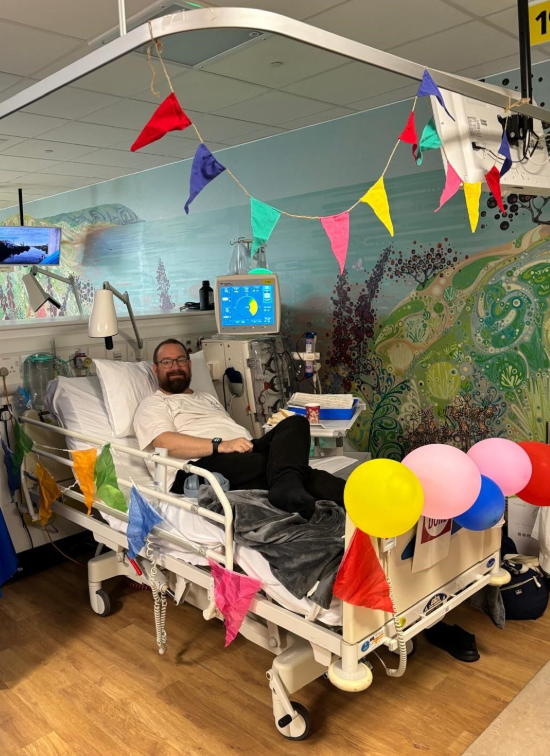
- James Barnett, 41, from Neath, has been waiting for a second kidney transplant for five years. He received his first transplant in 2009, which lasted for a decade
Almost 400 (371) people in Wales are currently waiting for a life-saving organ transplant – but the people of Wales are the least likely of the four nations to consent to donation going ahead when approached after the death of a loved one.
Just 57% of the families consulted about donation when their loved one dies support it going ahead, the lowest consent rate across the four nations. In England and Northern Ireland the rate stands at 59% and at 63% in Scotland.
Despite the change in the law meaning it is assumed people will be donors unless they have opted out, families are still involved in the conversations about donation, making the final decision on whether it can go ahead.
Statistics show that families are significantly more likely to support their loved one’s decision to be a donor when they have expressed their decision, so it’s vitally important for people who want to donate their organs to register on the NHS Organ Donor Register (ODR).
Across Wales, just 44% of people have formally expressed their decision to be a donor by registering on the ODR, the second lowest rate across the four nations – England sits at 40%, Scotland at 54% and Northern Ireland at 57%.
In the last year (2024/2025), 20 people from Wales have died while waiting for an organ transplant and 217 people in the area have died waiting in the last decade (2015-2025).
James Barnett, 41, from Neath, is one of the 371 people in Wales waiting for a lifesaving transplant. He has been waiting for a second kidney transplant for five years, after his first, which he received in 2009, failed after 10 years. The antibodies from the first transplant and a number of blood transfusions for anaemia have made it more difficult for him to find a donor match. He has been on dialysis for seven years. He says:“Waiting for a transplant is hard. I got my first quite quickly – within nine months – and so I thought it would be the same this time round, but the waiting list is at its highest ever level and I have antibodies. The two things combined have made my wait so long already and who knows how much longer it might take.
“I live every day with my phone on loud next to me. Every time I get a call, my heart skips a beat – and then there’s the disappointment when you answer and it’s not the call. But if I’m honest, I’ve changed my mindset to tell myself that it’s not going to happen, that I’m not going to get my transplant. If I do, it’s a bonus.
“Put simply, the odds of me – and everybody else on the list – finding the match that we need can only be increased through more families making that extremely difficult yet generous decision to donate their loved one’s organs when they die. It’s disappointing to hear that the people of Wales are the least likely to consent to donation. If you want to be a donor, make your decision known – confirm it on the NHS Organ Donor Register and then speak to your family, too. It could be that, when you die, somebody is waiting for the specific blood or tissue type that you have but if your family don’t support donation, it won’t go ahead and that person has lost their chance.
“I know it’s not a nice thing to think about but it’s an important thing to do.”
Anthony Clarkson, Director of Organ and Tissue Donation and Transplantation at NHS Blood and Transplant, says: “While it’s wonderful to hear that James has benefitted from organ donation, it’s extremely difficult to hear that he has now been waiting so long for a second transplant. James is one of many people in Wales who are on the waiting list for an organ and the reality is that, sadly, we just don’t have enough donors to get everybody the transplant that they need.
“We can change that if more people confirm their donation decision on the NHS Organ Donor Register. By doing so, you’ll leave your family in no doubt about what it is you want and you could save up to nine lives.”
Health and Care Secretary, Mabon ap Gwynfor said:“Wales made history by becoming the first nation in the UK to introduce deemed consent for organ donation – and its impact has helped save and transform many lives. Legislation can only take us so far though. It’s vital people talk with their families and register their decision. It could be you or someone you love waiting on that list.”
To find out more, and to register an organ and tissue donation decision, visit organdonation.nhs.uk, call 0300 123 23 or use the NHS app.
Related Posts

The decline of the Welsh NHS continues, Wales had the least availability of NHS dentists of UK nations
Off the record: organ donation and overspend
More time needed to assess long-term effectiveness of organ donation law