
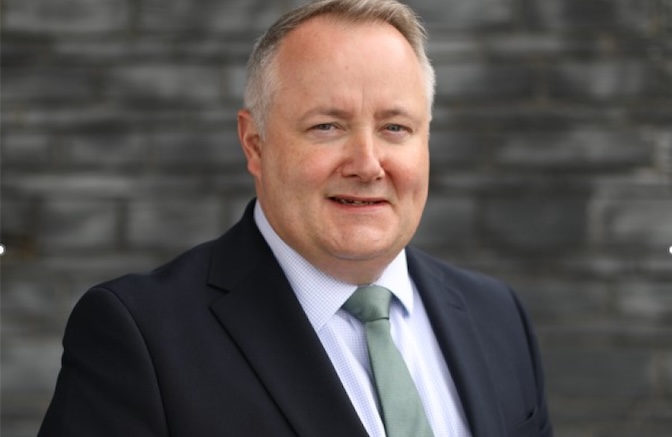
Responding to a statement from the Institute for Fiscal Studies about the fiscal challenges facing the new Plaid Cymru Government, that ‘not all its manifesto pledges are likely to come to fruition’,
Darren Millar MS, Leader of the Welsh Conservatives, said:
“It was clear during the recent election campaign that Plaid Cymru’s manifesto was an uncosted and unaffordable wish list that would be impossible to deliver in full.
“The new Welsh Government now needs to be honest with the public about which flagship commitments will need to be dropped, which public services it intends to cut, and which taxes it intends to increase in order to make ends meet.”
BRIEFING
IFS: Wales’s new Plaid Cymru government faces a difficult fiscal outlook – and the need to find common ground with other parties
Last week saw it confirmed that Plaid Cymru will form the new Welsh Government on its own. But a tough fiscal outlook and, as a minority government, the need to forge consensus with other parties to pass legislation – including Budgets – mean that not all its manifesto pledges are likely to come to fruition. With the Green Party and Liberal Democrats having just two and one seat, respectively, the support (or abstention) of at least one of Reform UK, the Conservatives or Labour will be needed for measures requiring legislation.
Some pledges will be easier to progress from both a fiscal and a political perspective. For instance, both Plaid Cymru and Labour pledged to make council tax fairer, and they previously collaborated on reform proposals as part of a cooperation agreement in the last Senedd term. Both also support an expansion of free school meals to all children in secondary schools whose families are in receipt of universal credit (not just the lowest-income ones). On the other hand, Plaid Cymru’s proposals for improving school standards – including reforming the Curriculum for Excellence, increasing the role of synthetic phonics in literacy, and the greater use of data from tests – bear some similarities with proposals from Reform UK and the Conservatives.
Other policies may be more difficult to enact, at least in full. While all parties bar Reform UK pledged extensions to free childcare entitlements, in a difficult fiscal outlook, finding the £400 million a year needed for Plaid Cymru’s proposals would likely require cutbacks to other services or increases in taxation. Caps on increases in private sector rents, proposed by both Plaid Cymru and the Green Party, are opposed by Reform UK and the Conservatives elsewhere in the UK, who cite concerns that this would reduce the supply of rental property – a position shared by Labour during the last Senedd term, at least. And proposals for a new Welsh child payment of £10 per week per child for families in receipt of universal credit, as well as costing over £100 million a year to fully roll out, would require UK government approval to do so.
The new government will therefore have to choose carefully which pledges it prioritises given the financial situation – and the scope for finding a majority in the Senedd in favour of different policies.
David Phillips, head of devolved and local government finance at IFS, said:
‘The incoming Plaid Cymru government will face both financial and political challenges as it seeks to implement its various tax and spending plans. Policies with lower direct financial costs, and/or with support from one or more of Reform UK, the Conservatives and Labour, will be easier to progress – this may include changes to council tax and changes to certain school-related policies. In contrast, policies with big price tags – such as expanded childcare provision – or where support from the other parties is less assured – such as strict rent controls – would be more challenging to deliver. Paying for significant new entitlements to government support would require either cutbacks to other spending or increases in devolved tax revenues – both feasible, but requiring difficult trade-offs. And persuading other parties to vote for, or at least abstain on, policies they have previously voiced opposition to may require concessions in other areas.’
Read the briefing in full here.
ENDS
Related Posts

Labour has not come clean over £58m received for cladding replacement

Labour and Plaid Cymru’s £63 million ‘Nation of Sanctuary’ policy under scrutiny as people smugglers jailed for Wales-based operation

New Water Regulator Won’t Clean Up Labour and Plaid’s Mess